


¶¶Òõ´«Ã½ Career Institute®
Our Career Institute was established to empower all workers and learners by addressing career barriers through research-driven solutions and meaningful partnerships.
Driving research for career advancement
Housed within the University's College of Doctoral Studies, the Institute conducts impactful research and collaborates with leading organizations such asÌý,ÌýÌýand theÌýÌýto explore broad and persistent barriers to career growth.ÌýThrough annual initiatives like the Career Optimism Index® study and targeted reports in our Career Optimism Special Report®ÌýSeries, the Institute delivers actionable insights on relevant topics, including the challenges of dual caregiving, career barriers in rural America and the disconnect in skills-based hiring practices.
CAREER OPTIMISM INDEX®
A comprehensive study of American workers’ career perceptions

The 2026ÌýCareer Optimism Index® study highlights an emerging shift in the workforce. While many workersÌýremainÌýcautious in a stabilizing labor market, they are increasingly using AI to build skills, strengthenÌýconfidenceÌýand prepare for future career growth. At the same time, employers are working to keep pace — creating new urgency around AI guidance, internalÌýmobilityÌýand talent retention.

Workers who are comfortable with and knowledgeable about AI report even greater optimism about available job opportunities than workers overall (75% compared with 63%). The findingÌýsuggestsÌýAI is not only supporting day-to-dayÌýproductivity, butÌýalso strengthening confidence in future career movement.

Employee demand for AI skill-building is strong even without formal employer support. At the same time, 60% of workers say they want more guidance in learning AI tools, pointing to a gap between worker interest and organizational enablement.

Retention pressure is rising as AI capability becomes more valuable. The study alsoÌýfoundÌý62% of employers say employees are developing AI skills faster than the organization can adapt, underscoring the need for clearer workforce strategy and growth pathways.

Special report series
Building on our Career Optimism Index findings, our special reports provide in-depth insights into key challenges impacting American workers today, offering actionable strategies and solutions to drive meaningful change.

ILLUSION OF PROGRESS IN SKILLS-BASED HIRING
Skills often get lost in translation during hiring
The Career Optimism Special Report®ÌýSeries: The Illusion of Progress in Skills-Based Hiring identifies a critical disconnect in today’s job market:Ìýwhile employers are largely moving towards skills-based models, most organizations lack the tools to assess those skills effectively, highlighting an urgent need for better hiring practices.


MOMS IN THE SANDWICH GENERATIONÌý
Dual caregivers face career-limiting pressure
Produced in partnership with Motherly,Ìýthe Career Optimism Special Report® Series: Moms in the Sandwich Generation, reveals critical insights on the career cost of dual caregiving and the imperative for increased employer support to serve the fastest-growing employee segment in the U.S.

Generating rural opportunities in the workplace
Report reveals keys to rural America's future
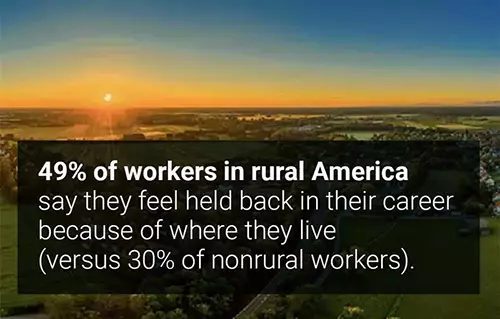
Workers living in rural America are more likely to feel held back in their career because of where they live, compared to their nonrural counterparts. The Generating Rural Opportunities in the Workplaceâ„¢ (G.R.O.W.â„¢) report explores this reality and opportunities to improve future progress.
More insights about career perceptions
In the news

HR Dive
Ìý
Forbes
Allwork.Space
White papers

Provost and Chief Academic Officer John Woods discusses the work of the ¶¶Òõ´«Ã½ Career Institute®


For more information
To learn more about ¶¶Òõ´«Ã½ Career Institute® or the Career Optimism Index®, please contact us at careerinstitute@phoenix.edu.